

116 total views
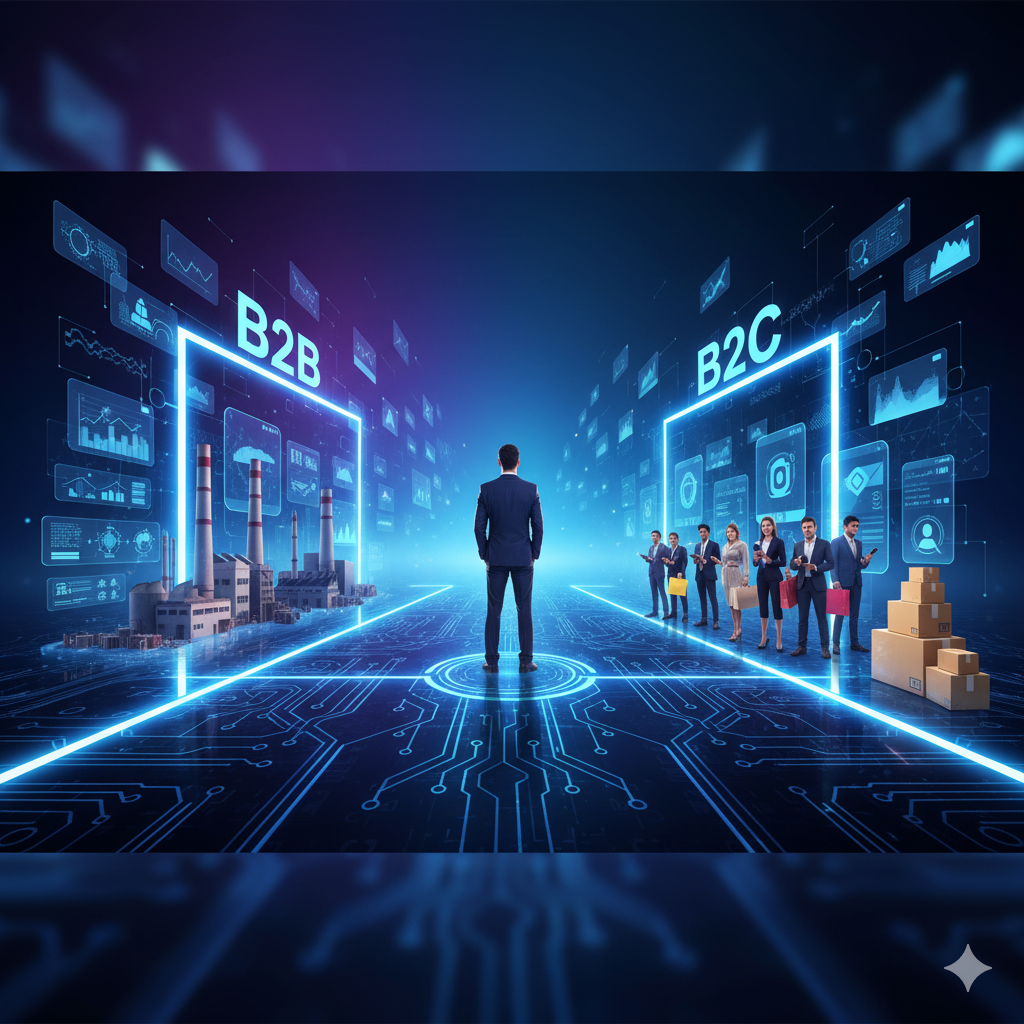
In today’s fast-moving digital economy, marketplace platforms have become the backbone of online commerce. From Amazon and Alibaba to Etsy and Upwork, marketplace apps have completely transformed how consumers and businesses buy, sell, and connect. Yet, one of the most critical strategic decisions entrepreneurs and enterprises face when building their platform is choosing the right model — B2B (Business-to-Business) or B2C (Business-to-Consumer).
As a leading marketplace app development company, one of the most common questions clients ask is: Which model suits my business goals better? The answer depends on your target audience, product type, operational capacity, and monetization strategy.
In this blog, we’ll explore the differences between B2B and B2C marketplaces, analyze their advantages and challenges, and help you decide which is the best fit for your digital venture.
Understanding B2B and B2C Marketplaces
Before diving into the pros and cons, it’s essential to understand how each marketplace model operates.
1. B2B Marketplaces (Business-to-Business)
A B2B marketplace connects businesses that sell products or services to other businesses. For example, Alibaba, ThomasNet, and IndiaMART allow manufacturers, distributors, and wholesalers to sell their goods in bulk to retailers or other enterprises.
These platforms often involve:
- High-volume transactions
- Negotiated pricing
- Contract-based relationships
- Longer decision-making cycles
B2B marketplaces typically focus on building trust, reliability, and streamlined logistics since purchases are large and recurring.
2. B2C Marketplaces (Business-to-Consumer)
A B2C marketplace, on the other hand, connects individual consumers directly with businesses or individual sellers. Examples include Amazon, Etsy, and Uber Eats.
Here, the focus is on:
- Instant purchases
- Seamless user experience
- Personalized recommendations
- Fast delivery and customer satisfaction
B2C marketplaces emphasize branding, marketing, and user engagement more than long-term contracts.
Core Differences Between B2B and B2C Marketplaces
| Factor | B2B Marketplace | B2C Marketplace |
|---|---|---|
| Target Audience | Businesses and enterprises | Individual consumers |
| Transaction Size | High-value, bulk orders | Low to medium-value single orders |
| Decision Process | Longer, multi-level approvals | Instant or impulse-based |
| Customer Relationship | Long-term partnerships | One-time or repeat retail buyers |
| User Experience | Functional, data-driven | Engaging, visually appealing |
| Pricing Structure | Negotiated or tier-based | Fixed or dynamic pricing |
| Payment Methods | Invoices, bank transfers, credit terms | Credit cards, wallets, BNPL |
| Examples | Alibaba, ThomasNet, Made-in-China | Amazon, Etsy, Flipkart |
Each model serves a different purpose and audience, and understanding these nuances helps businesses craft a sustainable strategy.
Advantages of B2B Marketplaces
1. Larger Transaction Values
B2B marketplaces typically handle high-value bulk transactions, resulting in significant revenue per order. A single sale could equal hundreds or thousands of retail purchases.
2. Recurring Business Relationships
Unlike B2C models that rely on frequent new customers, B2B marketplaces thrive on long-term contracts and repeat business, ensuring steady revenue flow.
3. Lower Customer Acquisition Costs (CAC)
Once a B2B customer is acquired, they often remain loyal due to the effort involved in vendor onboarding, reducing ongoing marketing costs.
4. Efficient Supply Chain Management
Modern B2B marketplaces integrate ERP, inventory, and logistics management, ensuring smooth procurement and fulfillment for enterprises.
Challenges of B2B Marketplaces
1. Complex Buying Process
B2B purchases often require multiple approvals, making the sales cycle longer and more complicated.
2. Custom Pricing and Negotiation
Unlike B2C’s fixed pricing, B2B requires dynamic pricing algorithms, quote systems, and tier-based discounts — increasing technical complexity.
3. Limited Buyer Pool
The number of buyers in B2B is smaller compared to consumer markets, which may limit rapid growth in the initial phase.
Advantages of B2C Marketplaces
1. Massive Customer Reach
B2C marketplaces can target millions of consumers globally, scaling faster than B2B counterparts. With effective marketing, a platform can gain rapid traction.
2. Easy to Market and Brand
Emotional branding, social media, and influencer campaigns are powerful tools to attract consumers — a strategy B2C models can leverage effectively.
3. Seamless Mobile Experience
As a top mobile app development company, we’ve seen that B2C marketplaces thrive on mobile-first experiences — intuitive design, quick payments, and instant order tracking make all the difference.
4. Diverse Monetization Models
B2C platforms can generate revenue through:
- Commissions on sales
- Subscription plans
- Advertising placements
- Premium seller accounts
Challenges of B2C Marketplaces
1. High Competition
The B2C landscape is crowded. Competing with giants like Amazon or Flipkart requires strong differentiation and branding.
2. Customer Retention
Consumers are price-sensitive and may switch platforms quickly if they find better deals or faster delivery elsewhere.
3. Marketing Expenses
Constant engagement and promotions are essential to maintain visibility, resulting in higher acquisition costs.
How a Marketplace App Development Company Can Help
Whether you choose a B2B or B2C model, success hinges on robust technology and seamless user experience. Partnering with an experienced marketplace app development company can make a huge difference in bringing your vision to life.
Here’s how a development partner adds value:
1. Strategic Consultation
Experts analyze your business model, target market, and monetization goals to recommend the best platform type — B2B, B2C, or even hybrid.
2. Custom Design and User Flow
The design of a marketplace app varies significantly:
- B2B apps need detailed dashboards, quote systems, and catalog management.
- B2C apps prioritize attractive UI, quick navigation, and one-click checkout.
A skilled mobile app development company ensures your user journey aligns perfectly with your audience expectations.
3. Scalable Architecture
From managing bulk transactions to real-time inventory updates, a professional development team builds a scalable backend capable of handling high volumes and peak loads.
4. Integration with Payment and Logistics
B2B platforms often need multi-currency and invoice-based payment systems, while B2C marketplaces rely on instant payment gateways and APIs for real-time tracking.
5. AI and Analytics
Modern marketplaces leverage AI-powered recommendations, chatbots, and predictive analytics to improve user engagement and operational efficiency.
B2B vs B2C: Choosing the Right Model for Your Business
To decide which model suits your business, consider the following factors:
1. Target Audience
- If your primary clients are businesses purchasing in bulk → Go B2B
- If you’re serving individual end-users → Go B2C
2. Transaction Volume
- For high-value, fewer transactions, B2B is ideal.
- For high-frequency, lower-value transactions, B2C works best.
3. Sales Cycle
- B2B sales cycles are slower but yield more stable revenue.
- B2C cycles are faster but require continuous marketing.
4. Growth Goals
- Want stable long-term partnerships? Choose B2B.
- Want rapid growth and brand recognition? Choose B2C.
5. Technology Investment
- B2B marketplaces require custom workflows and integrations.
- B2C marketplaces prioritize UX/UI and consumer-facing innovation.
The Hybrid Marketplace: Best of Both Worlds
Many modern platforms are moving toward a hybrid model — serving both businesses and consumers. For instance, Amazon Business combines B2B purchasing features with the same easy-to-use interface as its B2C platform.
Hybrid marketplaces benefit from:
- Broader audience reach
- Diversified revenue streams
- Flexible pricing models
- Shared logistics and technology infrastructure
However, developing a hybrid marketplace requires advanced customization, which only a specialized marketplace app development company can deliver efficiently.
Final Thoughts
The decision between B2B vs B2C marketplaces isn’t just about who you sell to — it’s about how your business operates, scales, and sustains growth.
If your goal is long-term, relationship-driven revenue with high-value deals, the B2B marketplace model is your path. But if you aim for rapid customer acquisition, strong branding, and frequent sales, the B2C model offers unparalleled reach.
No matter which route you take, success depends on having a reliable technology partner who understands your market, user behavior, and scalability needs. Partnering with a trusted marketplace app development company or mobile app development company ensures you have the right tools, features, and infrastructure to thrive in a competitive digital ecosystem.